Teylers
jacht naar kennis & kunst
Gamification
APP Development
Game Development
UX/UI Design
New Product Development
During my Video Game Development minor at the Amsterdam University of Applied Sciences, we were tasked with making the Teylers Museum in Haarlem more engaging for young visitors. The catch? We had to do it without altering a single aspect of the protected historical monument.
The Context: The museum commissioned an engaging, educational game specifically designed to make their space accessible and fun for children aged 8-10.
The Challenge: Because of its status as a historical monument, the physical environment was strictly off-limits. Absolutely no physical installations or modifications were allowed.
The Solution: We navigated this constraint by developing Teylers jacht naar kennis & kunst (Teylers Hunt for Knowledge and Art) a mobile scavenger hunt. By bringing the experience to a screen, we seamlessly layered gamification over the untouched museum. Children are tasked with helping Pieter Teyler restore his book, turning a restricted physical space into an interactive educational playground.
My Role: As Project Leader and Creative Lead, I guided the project from concept to delivery. I managed the team, spearheaded the ideation process, designed the core gameplay loop, and mapped out the initial user flows.
Discover: Mapping user needs, spatial boundaries, and industry trends.
Target Audience Research
Designing for 8-to-10-year-olds requires understanding their specific developmental stage. Our initial research highlighted several key drivers that informed our UX strategy:
Capable Navigators: With rapidly developing cognitive skills, this demographic is fully capable of handling complex interactions, such as reading floor plans.
Independent Explorers: They are autonomous learners who enjoy discovering new concepts on their own, provided they are in a safe environment.
Aesthetic Expectations: A colorful visual design is a foundational requirement to capture and hold their attention.
Field Research & Spatial Mapping
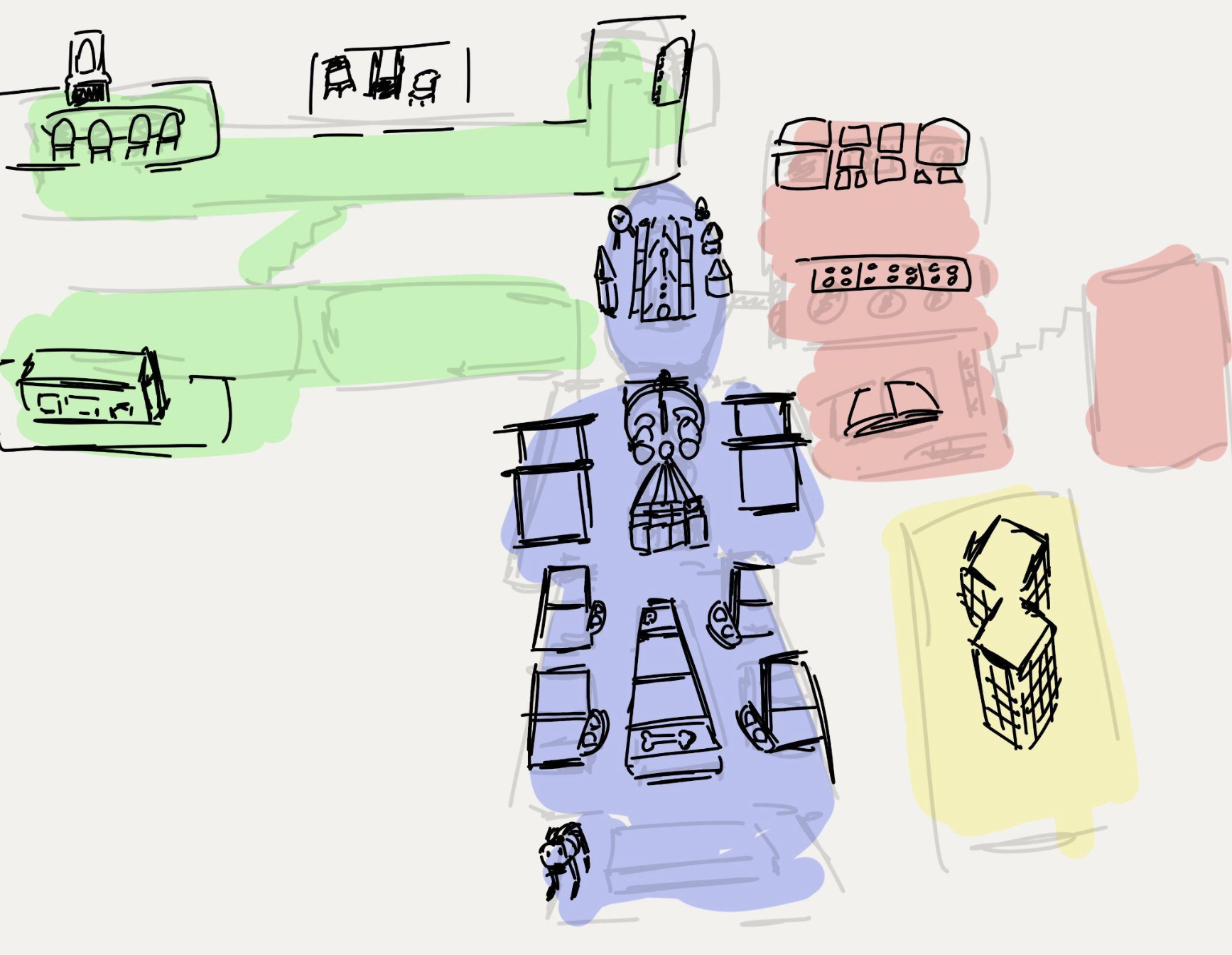
We conducted multiple on-site visits to map the museum's layout and observe natural user behavior. This field research defined the core parameters of our design challenge:
The Ultimate Constraint: As a protected Enlightenment-era monument, the building's original layout is historical. No physical items or installations could be added to the space.
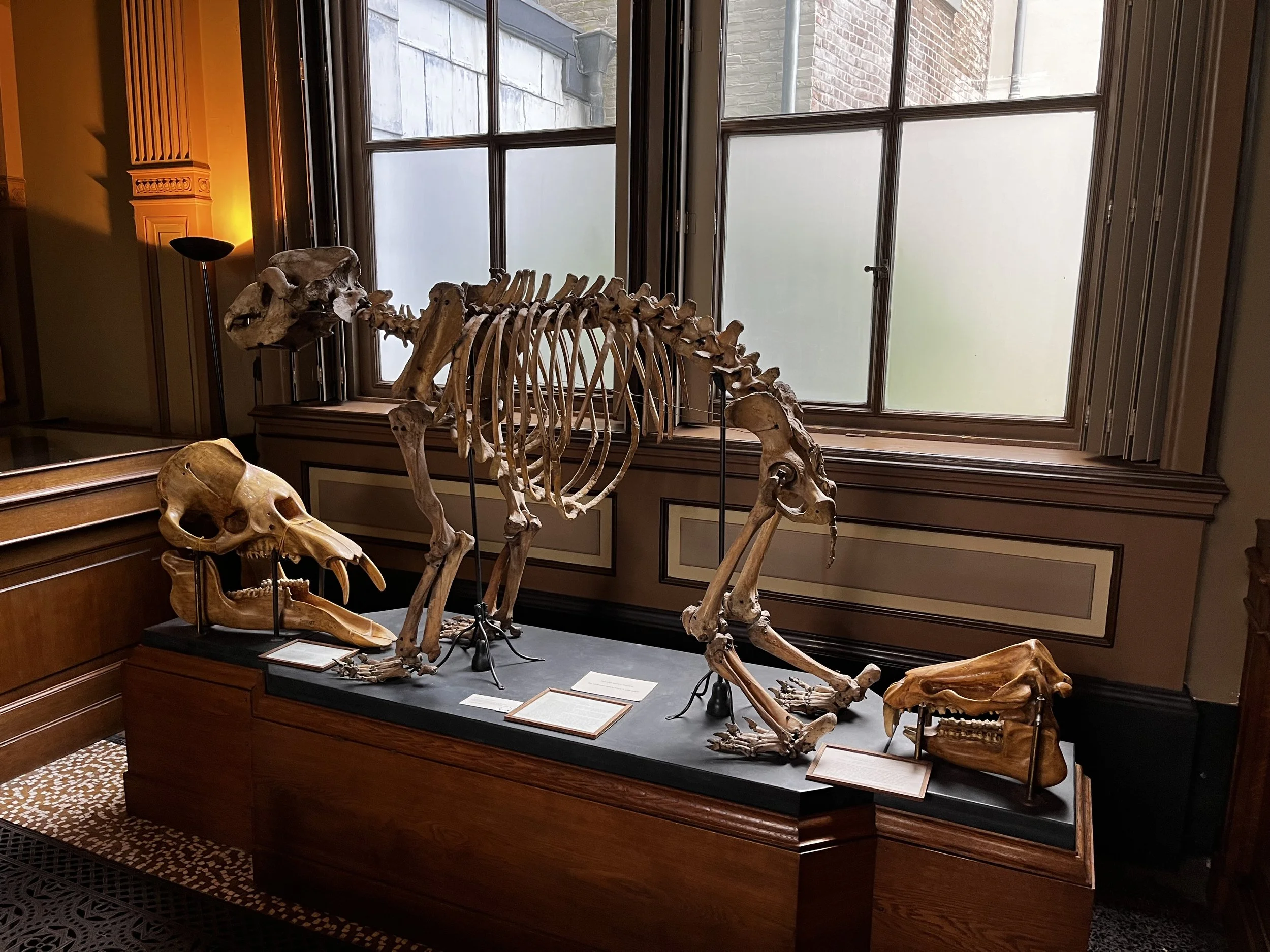
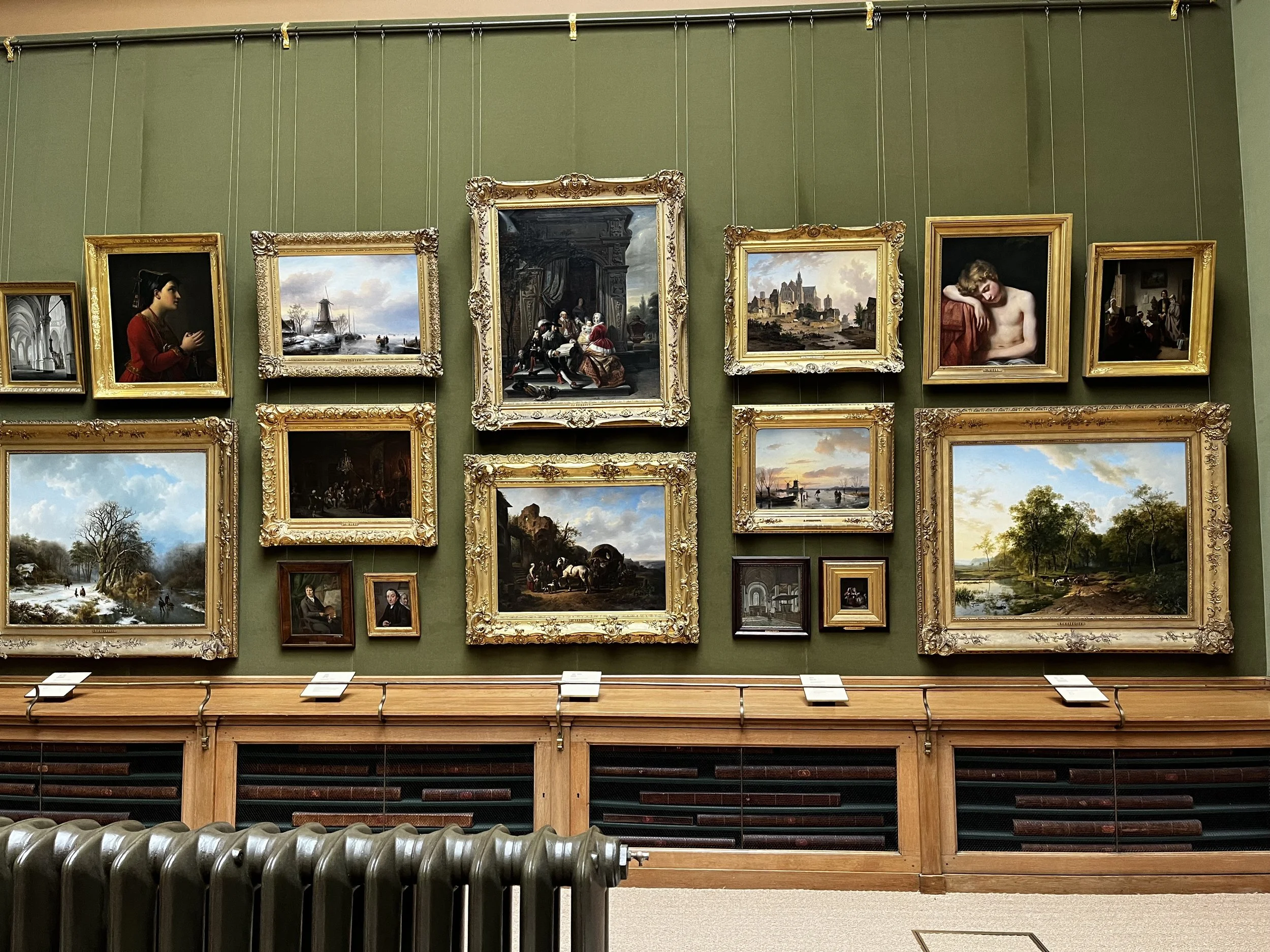
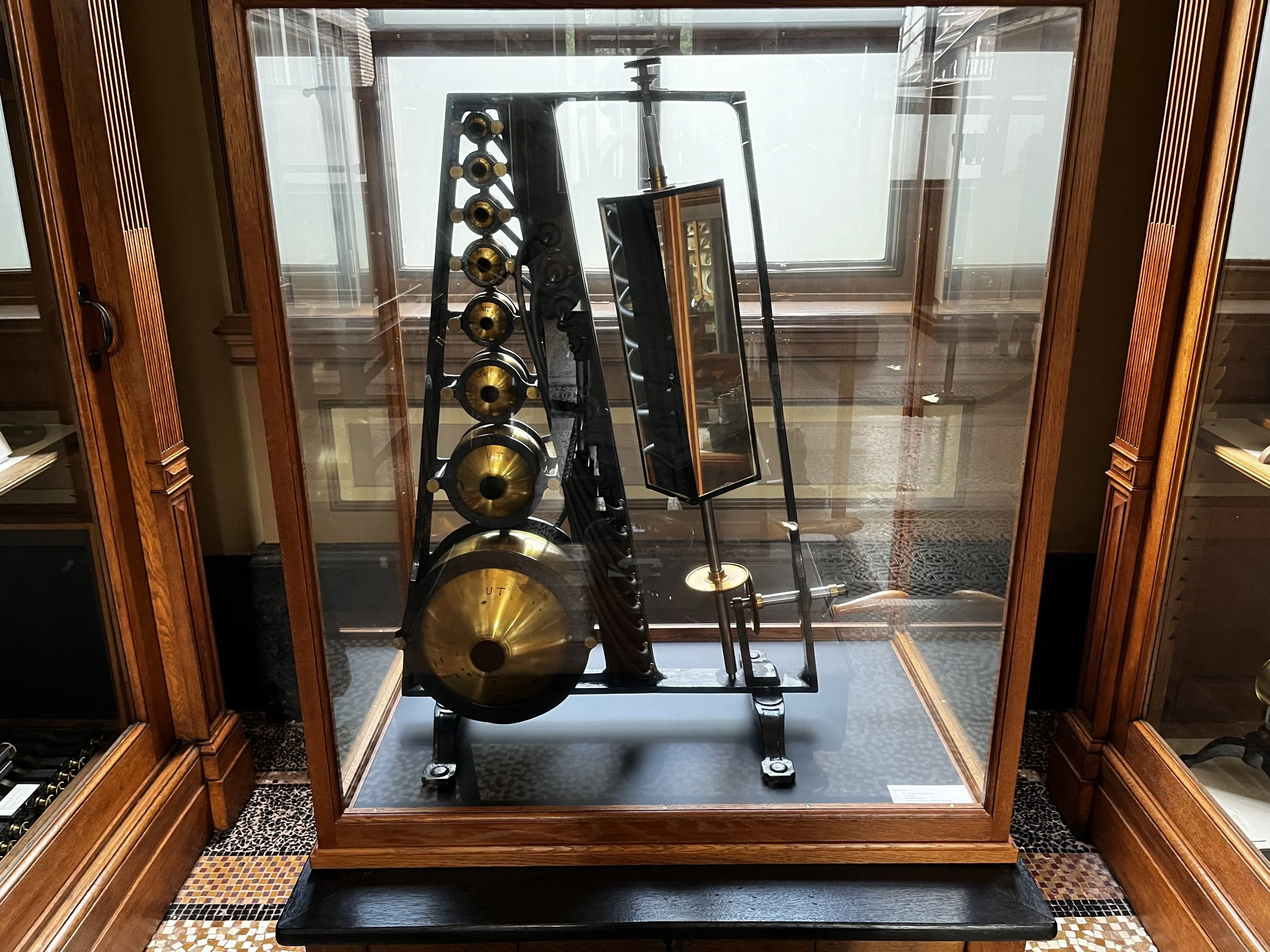
A Linear User Journey: Our spatial mapping revealed a clear, linear flow through the rooms (fossils, instruments, the Oval Room, and paintings), which naturally lent itself to a level-based game structure.
Identifying the Friction: We observed that children were highly engaged but restricted by the "look, don't touch" nature of the glass display cases. We needed a digital solution to make this passive viewing experience interactive.
Desk research: Digital Trends in Museums
To position our solution within current museum innovation, we conducted competitive research into how cultural institutions engage younger audiences. While many modern museum experiences rely on digital overlays, our strategy had to respect Teylers' strict requirement: zero physical installations inside a protected historical monument.
Interactive Quests & Trails: Major institutions like the Rijksmuseum, Van Gogh Museum, and Amsterdam Museum rely on gamified scavenger hunts, audio tours, and interactive quests to turn passive viewing into active learning.
Augmented Reality (AR) Integration: AR is an emerging trend used to bring static artifacts to life such as animating skeleton exhibits or scanning codes to render paintings on personal devices.
The Strategic Constraint: While AR is engaging, long-term sustainability concerns and the inability to add physical markers inside Teylers led us to focus on a lightweight, self-contained mobile solution instead.
DESK research: Gaming Patterns for Ages 8–10
To build an intuitive gameplay loop, we benchmarked popular commercial video games against dedicated educational apps designed for 8-to-10-year-olds. Our goal was to fuse the self-guided exploration of commercial titles with the accessible, clear learning mechanics of educational tools.
Commercial Mechanics (Minecraft, Animal Crossing): High player engagement in this age group is driven by safe exploratory environments, player autonomy, creative expression, and welcoming visual styles.
Educational Mechanics (Primary School Apps): Dedicated educational tools rely on low-barrier interaction principles such as simple quizzes, matching games, and fill-in-the-blank challenges.
The UX Takeaway: The experience needed to empower children to explore the physical space independently, making the museum visit feel like a self-guided adventure rather than a digital worksheet.
Define: Synthesizing Constraints & Requirements
Establishing the Core Mandate
With our research gathered, we synthesized our findings into a strict set of design parameters. The core challenge was clear: we needed an educational, multimodal experience that turned the physical museum into an essential game board, while leaving zero physical footprint.
Requirements
➤ Be accessible on standard smartphones (belonging to the child or parent).
➤ Connect directly to the physical collection across multiple galleries.
➤ Reflect Pieter Teyler’s Enlightenment-era scientific values.
➤ Encourage active observation rather than keeping the child glued to a screen.
Strategic Elimination & Scoping
Just as importantly, this phase was about defining what not to build. By evaluating early concepts against our spatial and cultural parameters, we intentionally discarded several initial directions:
✖ Augmented Reality (AR): Rejected because technological novelty offered questionable long-term sustainability for the museum.
✖ Audio-Guided Tours: Scrapped to prevent noise pollution in quiet, historical galleries.
✖ Physical Crafting Kits: Eliminated due to the logistical burden and extra infrastructure required from museum staff.
✖ Fantasy "Magical" Narratives: A "magical manuscript" idea was dropped because it conflicted with the museum's factual, scientific identity.
Develop: Prototyping mechanics and iterating through user testing.
User Testing & UI Pivots
To ensure our design resonated with 8-to-10-year-olds, we built interactive prototypes and conducted user testing sessions with both teachers and the target demographic. These tests quickly revealed critical flaws in our initial assumptions, prompting major UI pivots:
The "Click-Through" Problem: We observed that when presented with a lot of text, children instinctively clicked through as fast as possible without absorbing the experience. To solve this, we aggressively trimmed the narrative onboarding text to maximize reading willingness.
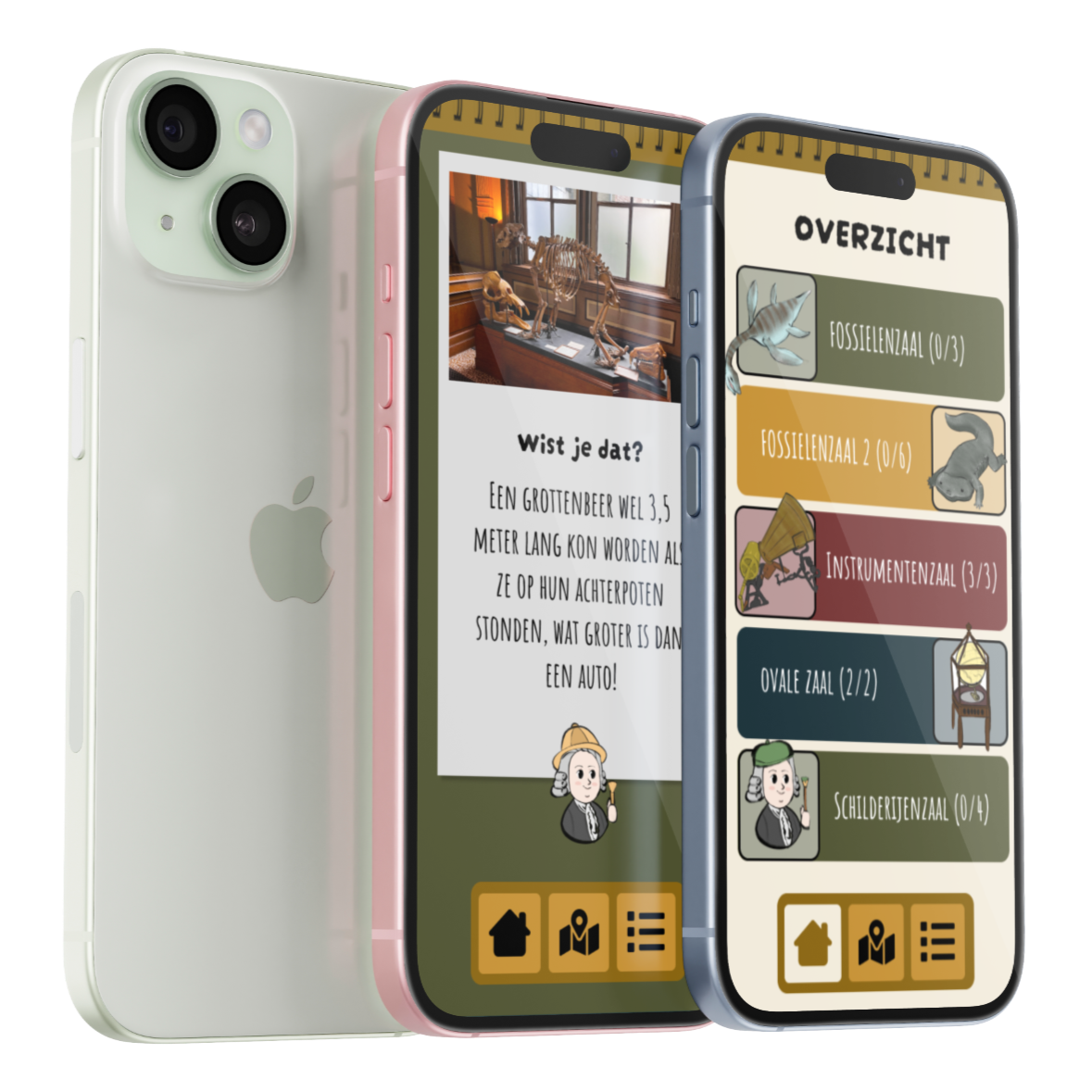
Re-Engineering Navigation: Initially, the interface relied on standard "next" and "previous" page buttons. Testing showed this encouraged mindless scrolling. We completely removed these buttons, replacing them with a map and a menu-based navigation system. This forced players to physically look up, orient themselves in the museum, and make intentional choices.
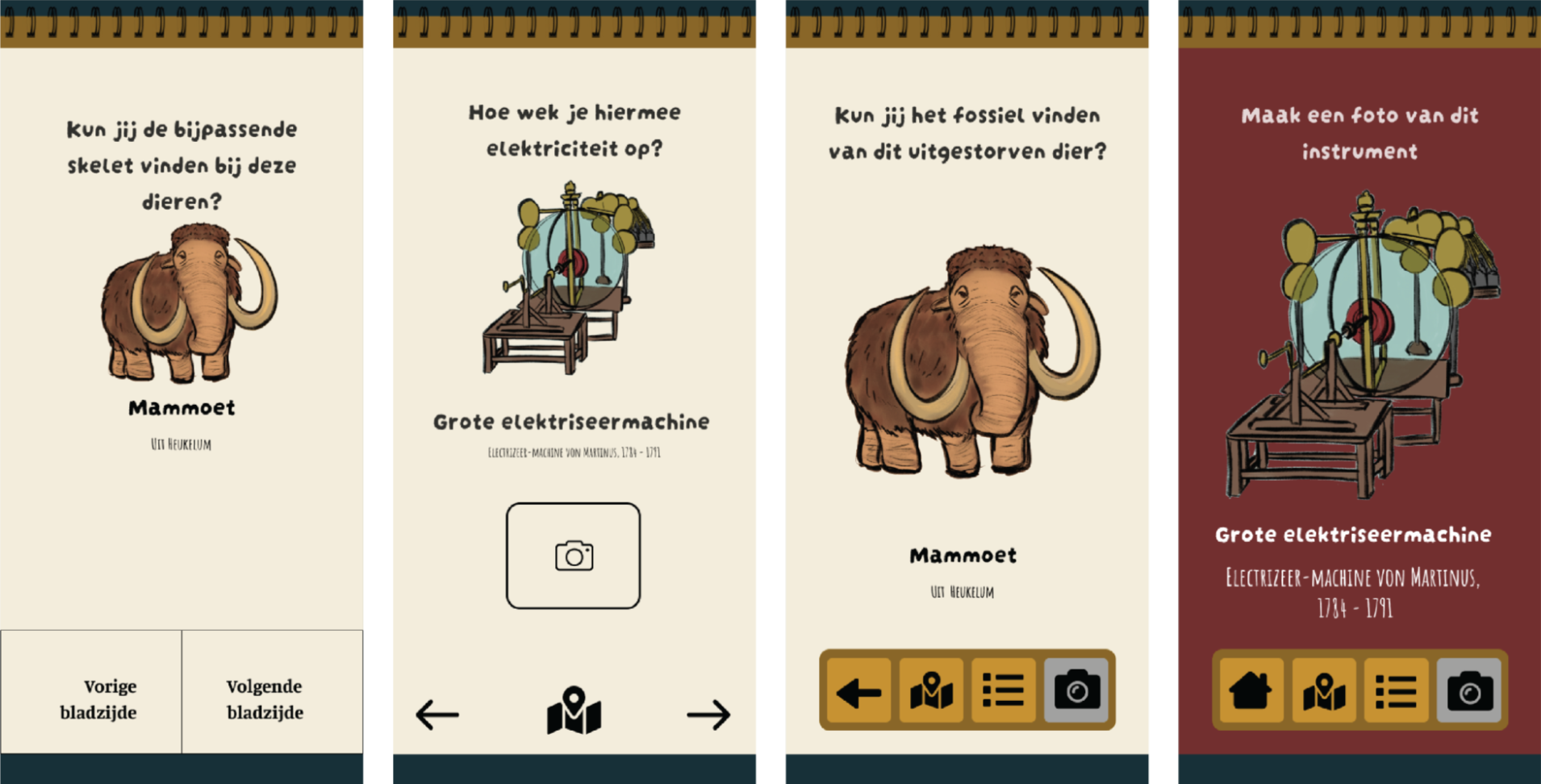
Prototyping Core Mechanics & Feedback Loops
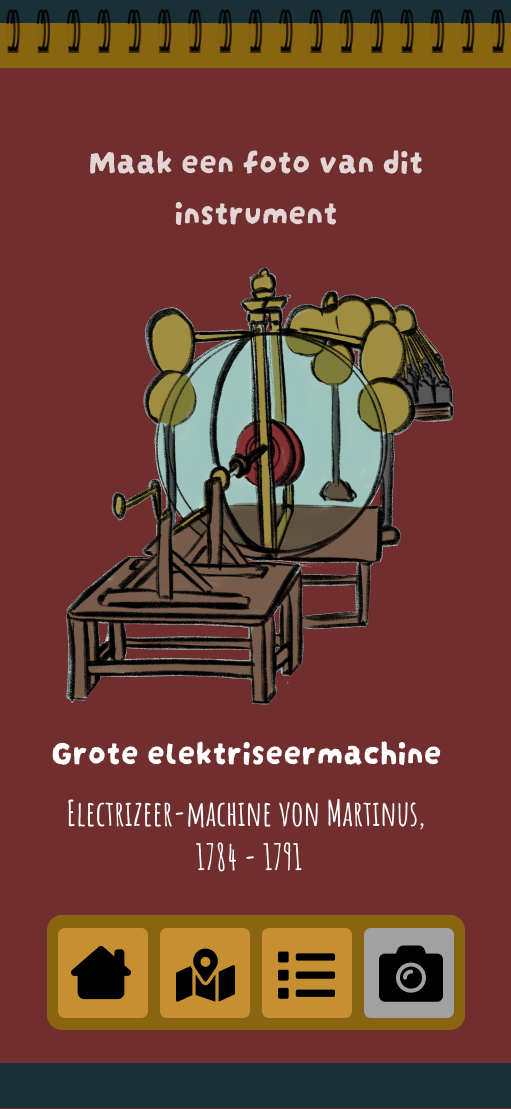
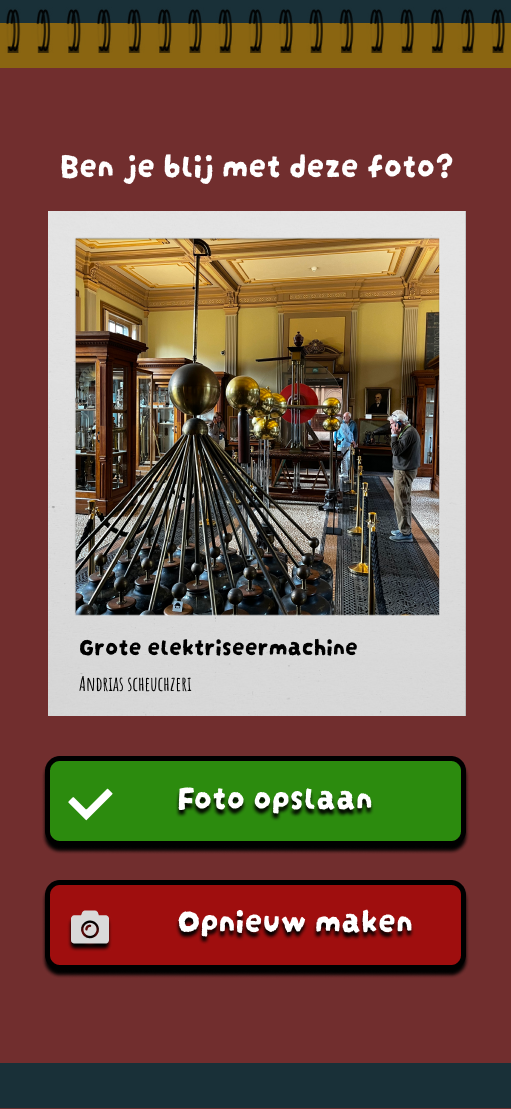
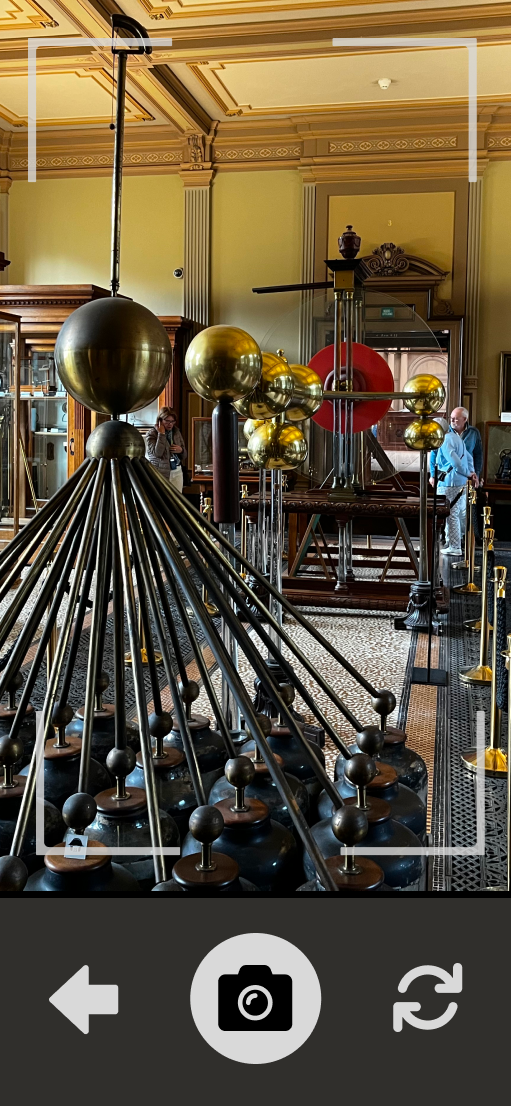
The Camera Mechanic: Because most artifacts (like fossils and scientific instruments) are locked behind glass, we prototyped a camera function allowing children to "collect" items by photographing them.
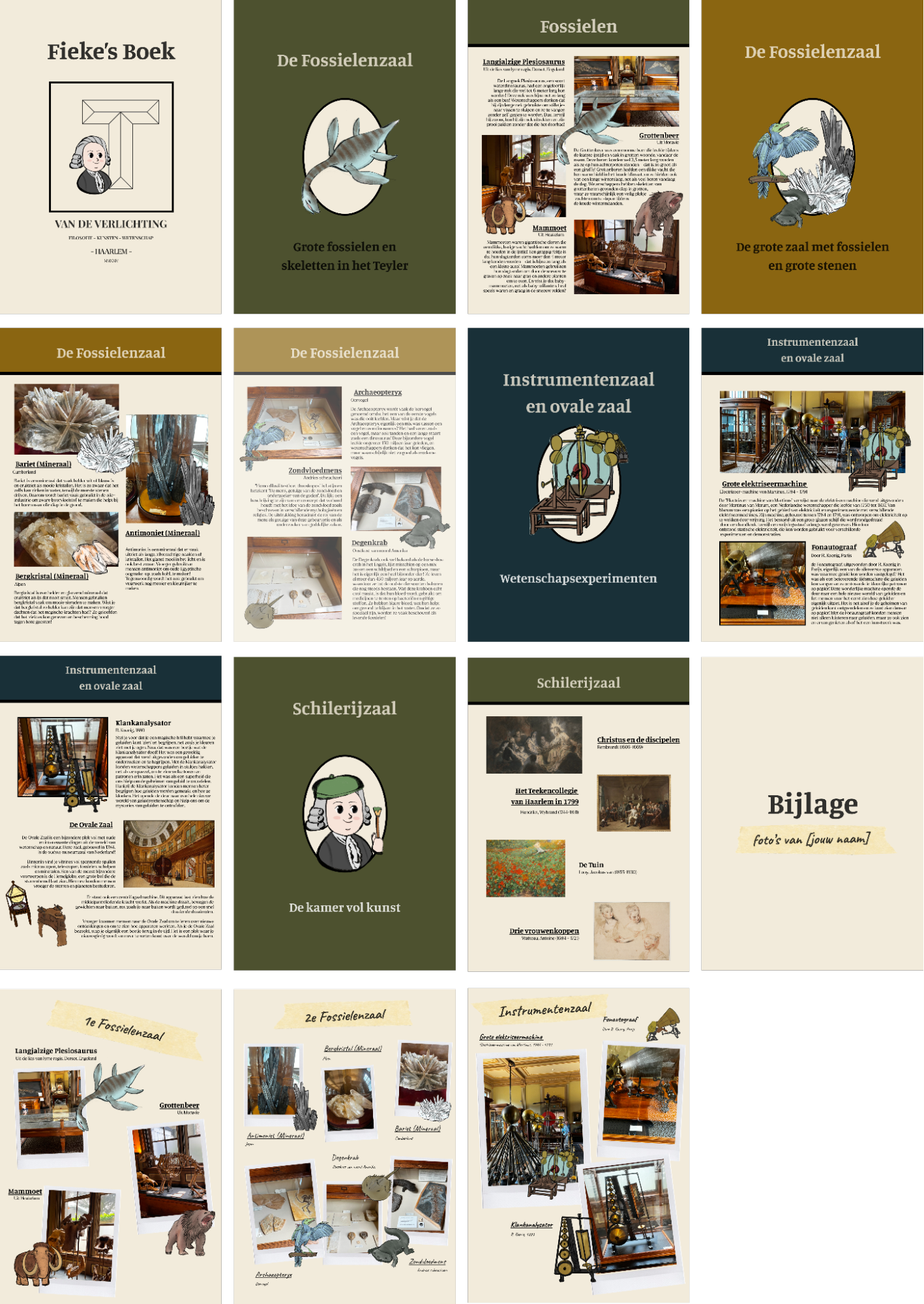
Visual Progression: Early iterations lacked clear feedback, leaving users confused about whether they had successfully completed a task. We introduced visual progression loops: the digital book begins with empty Polaroid frames that dynamically fill with the child's own photos as they succeed.
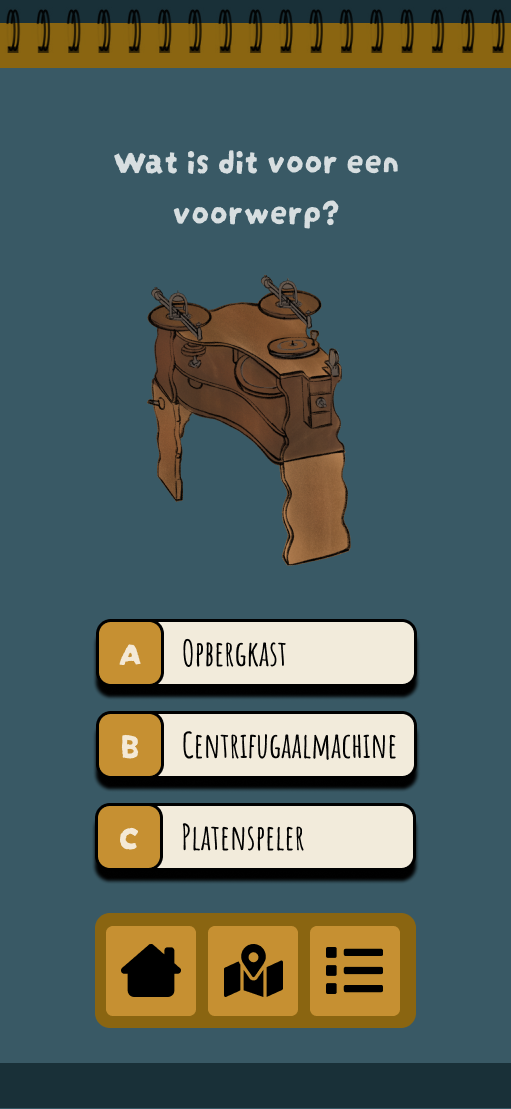
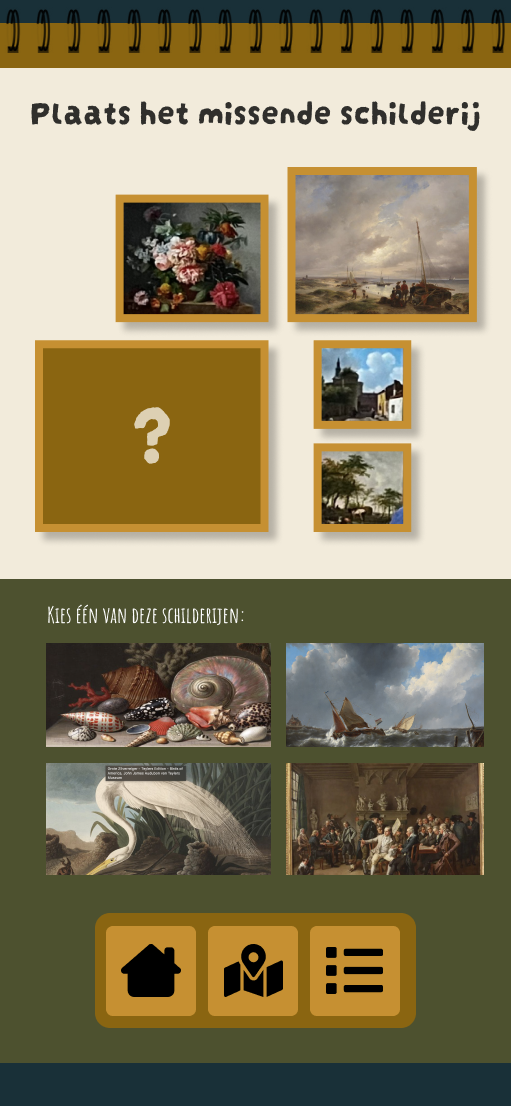
Varying the Gameplay: To prevent the core loop from feeling repetitive, we prototyped different mechanics tailored to specific rooms. While the Fossil Room relied on the camera, the Oval Room utilized multiple-choice riddles, and the Painting Gallery required players to analyze the physical walls to digitally place a missing artwork.
Deliver: The Final Experience & Value Creation
Story: Anchoring the Narrative in History
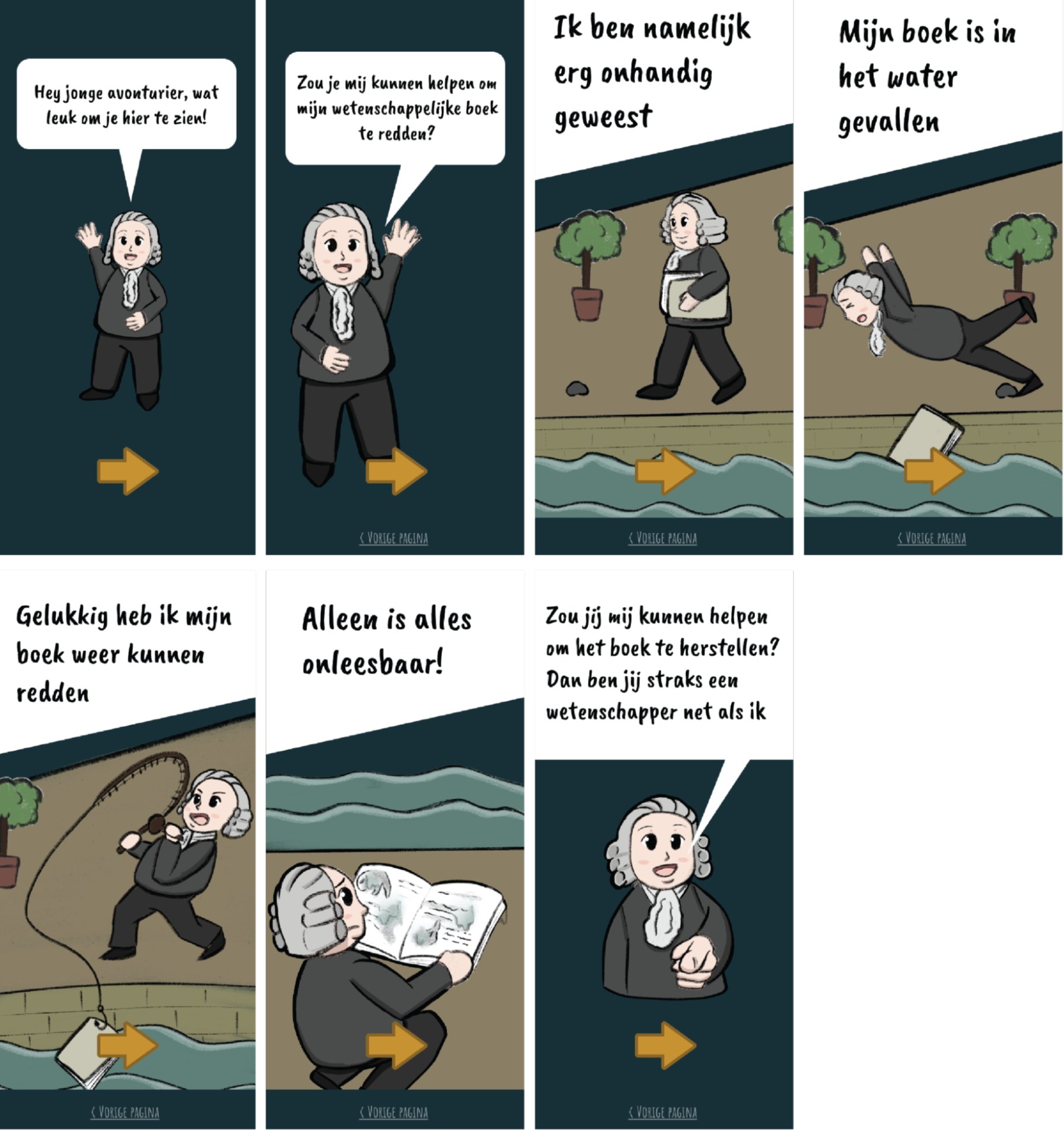
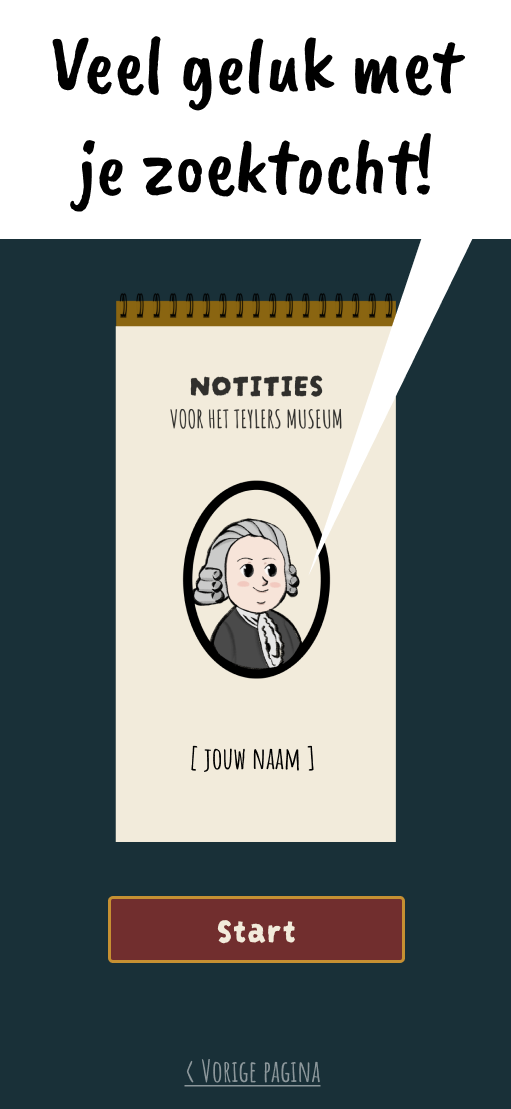
We designed a narrative that connected the child directly to the educational core of the museum. In the game, players are recruited by the museum's historic founder, Pieter Teyler himself. One of his prized books from the library has suffered water damage, and he urgently needs the player's help to find the missing information and restore the pages. This specific framing turned Pieter Teyler from a distant, abstract historical figure into an active, approachable companion throughout the visit.
Gameplay: Turning the Museum into a Game Board
To ensure the experience remained dynamic, we transformed the museum's linear layout into a level-based map, treating the physical collection as interactive "GameObjects". To keep children looking at the room rather than just their screens, we developed distinct mechanics tailored to the specific constraints of each space:
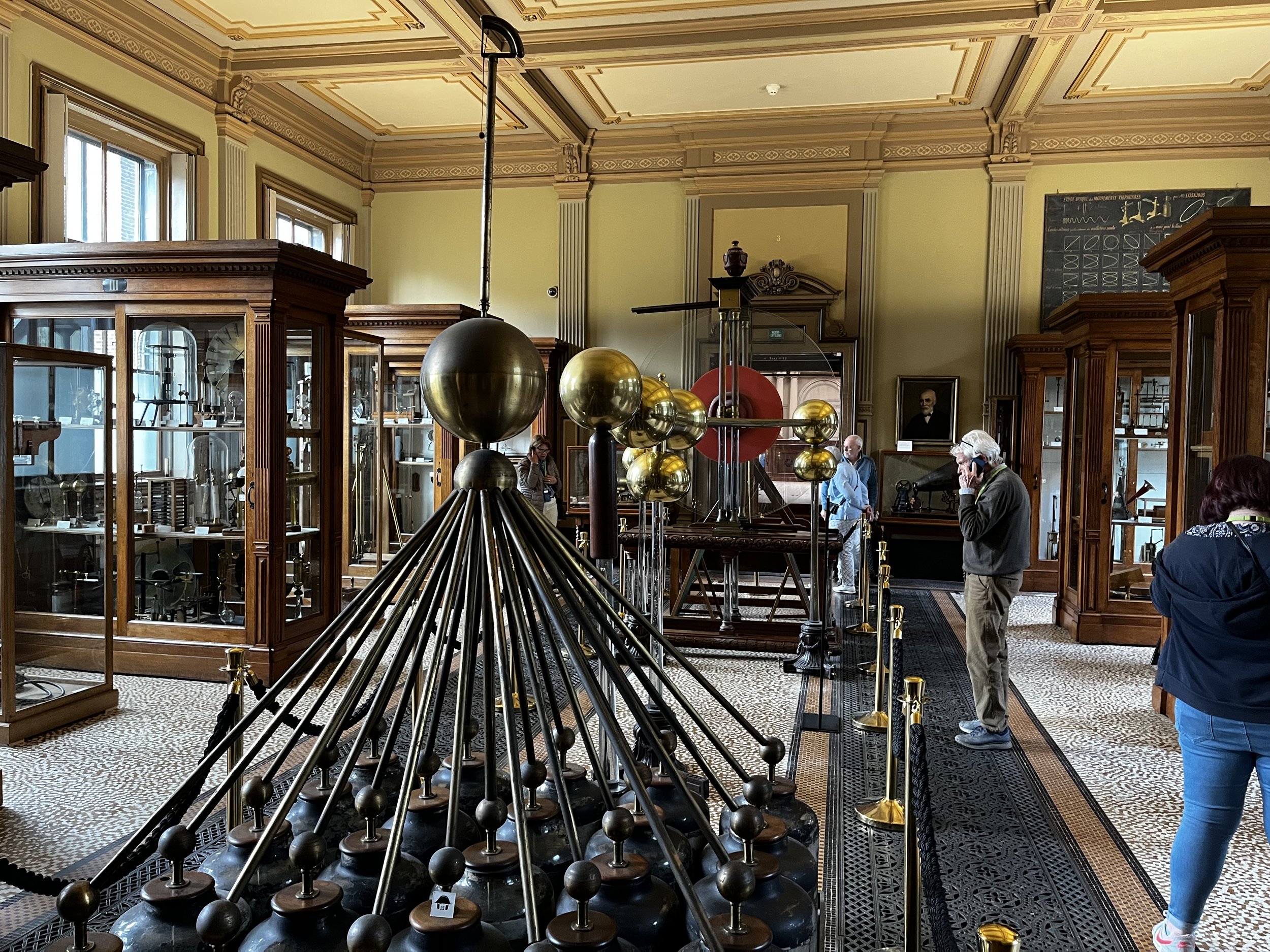
The Camera Mechanic: In the Fossil and Instrument rooms, where artifacts are strictly protected behind glass, players interact by taking photos of specific targets (such as the long-necked Plesiosaurus).
Spatial Riddles: In the Oval Room, players must physically investigate the exhibits and read the information plaques to solve multiple-choice naming riddles. Visual Matching: In the Painting Gallery, players must carefully analyze the physical walls to correctly identify and digitally place a missing artwork.
The Reward Loop: Every successful interaction rewards the player with a bite-sized historical fact, seamlessly bridging the gap between gamification and education.
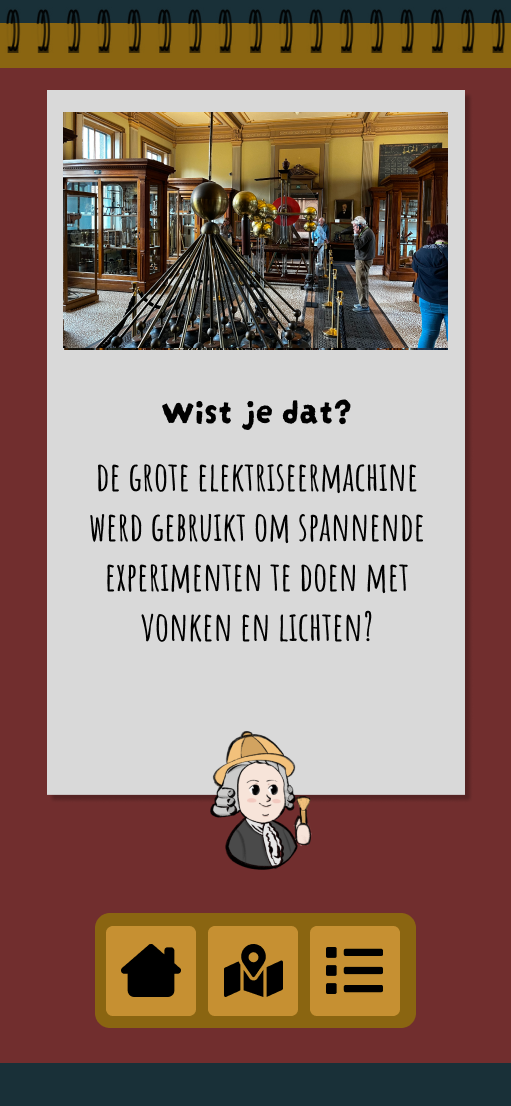
Visual Design: Balancing History and Play
The user interface was designed to feel like a personal digital notebook where a child records their on-site discoveries. We needed to respect the museum's Enlightenment-era identity while making the interface highly accessible for 8-to-10-year-olds:
Aesthetic & Typography: We utilized the museum's historic color palette but applied it more freely to create a vibrant, friendly digital environment. Typographic choices, specifically the Daruma Drop and Aminatic fonts, kept the interface approachable and easy to read.
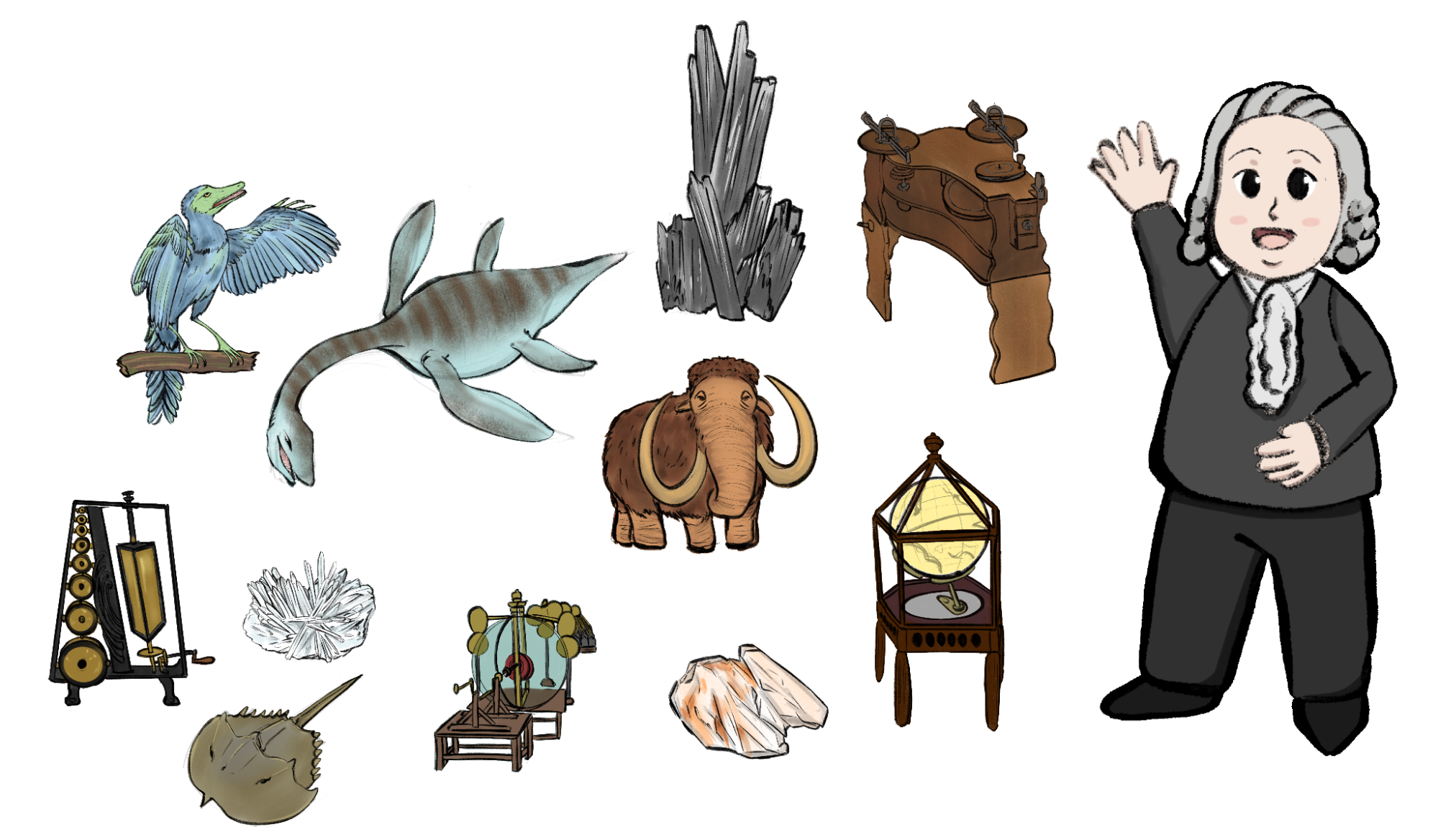
Character & Assets: We heavily stylized Pieter Teyler, giving him large eyes and rosy cheeks, to make him a welcoming guide. Additionally, we used custom sketch-style assets for the artifacts to spark imagination; for example, fossils were drawn as the living animals they once were.
The Final Deliverable: A Co-Created Souvenir
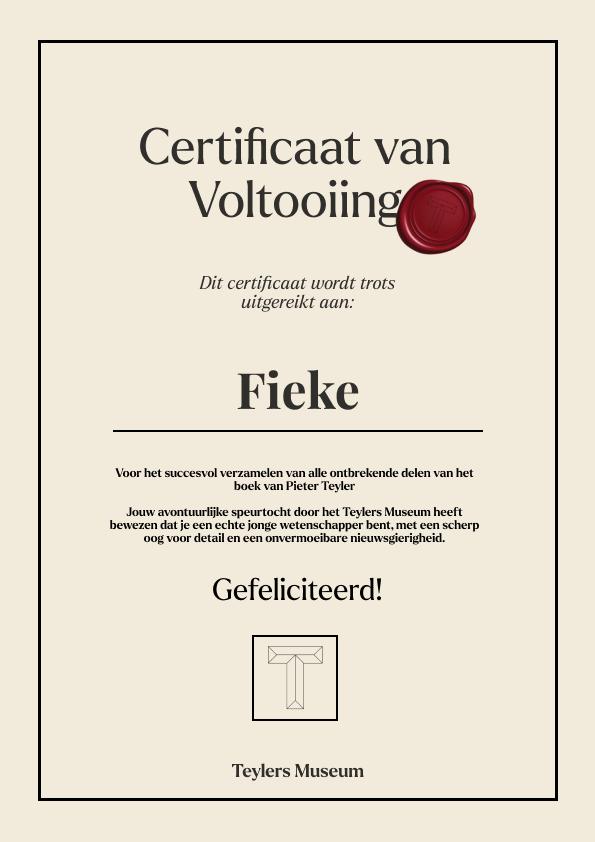
Upon completing the scavenger hunt, the child earns an "Aspirant Scientist" certificate and unlocks a downloadable PDF of Teyler's restored book. Crucially, this digital book is populated with the child's own photographs taken during their run. This provides a highly personalized, printable souvenir to take home, extending the educational experience while costing the museum absolutely nothing in extra physical materials or operational logistics.